

What is a servo-electric drive?
A servo linear actuator is largely made up of a servo motor, a drive controller and a mechanical force transmission. The servo motor converts electrical energy into a controlled rotational movement. A mechanical unit, such as a spindle, is used to generate a precise linear motion from this.

Precision through closed-loop control
An key component of a servo drive is the encoder. It monitors the position and movement of the motor shaft and delivers the data to the drive controller. The controller compares the set point and the actual value and corrects any deviations. This creates a closed-loop control system. This interaction enables a high degree of positioning accuracy and repeatability – characteristics that are particularly important in mould making, especially for complex movements and repetitive production cycles.

Why servo-electric?
Compared with pneumatic or hydraulic solutions, servo-electric systems offer advantages, particularly when it comes to precise motion control tasks. This also makes them appealing for modern mould and die making concepts.


Your benefits at a glance
- High precision: Position, speed and motion sequences can be precisely specified and controlled. This makes it possible, for example, to position slides or cores with precision.
- Reproducible processes: Defined motion profiles ensure consistent processes and a high repeatability – a key factor in stable production processes.
- Clean drive technology: Servo-electric drives operate without hydraulic oil and therefore avoid potential leaks. This ensures a clean working environment and offers advantages for applications with high requirements for cleanliness or cleanroom conditions.
- Dynamic movements: Servo motors can accelerate and decelerate rapidly, thereby enabling short motion and cycle times.
- Efficient energy conversion: Electrical energy is used directly to generate motion. If the layout is appropriate, this can help to reduce the number of energy-intensive auxiliary systems.
- Easy integration: Servo-electric drives can be integrated into higher-level machine and control systems via appropriate interfaces. This allows movements within the mould or die to be precisely synchronised with the machine cycle.
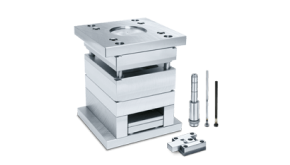
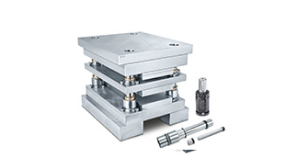
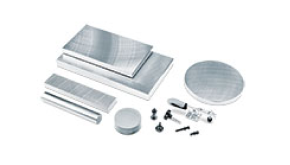
Our range, including matching accessories